
English| EUR
Suggested for you
More currencies
Choose a language
Mariscal Sucre International Airport sits 18 kilometers east of Quito's historic center in Tababela, and ground transport choices shape your first hour in Ecuador. Official taxis operate around the clock from a dedicated counter in the arrivals hall, while ride-share platforms and informal drivers compete for passengers outside the terminal perimeter.
Quick answer
Official taxi service from Quito airport operates 24/7 from a counter in the arrivals hall, charging a fixed flat-rate fare of 25 USD to central Quito zones. Payment is made at the counter before departure, and the driver receives a printed voucher linking the fare to your destination zone. Ride-share apps like Uber and Cabify function at the airport but require pickup at the departures level or parking area, adding 5 to 10 minutes to your exit time.
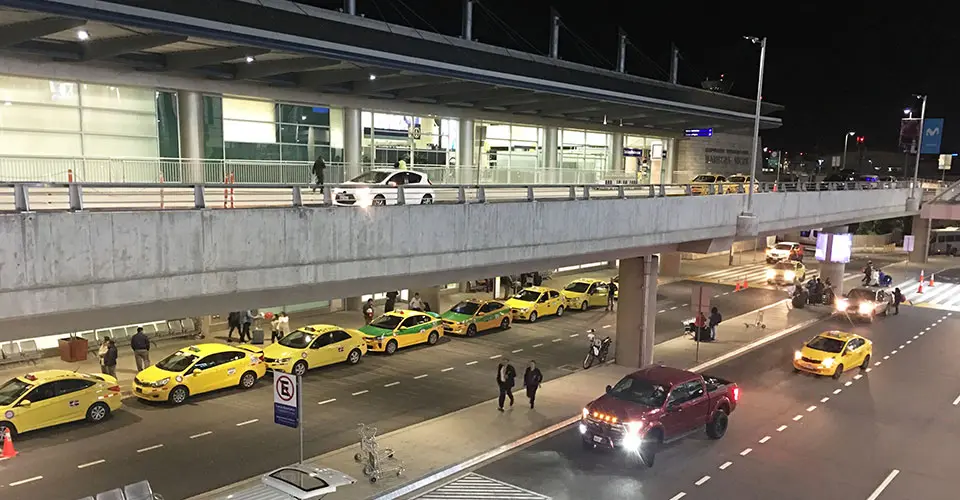
Mariscal Sucre International Airport introduced its fixed-rate taxi system in 2013 to eliminate haggling and overcharging at what was then South America's newest international gateway. The 25 USD fare to central neighborhoods applies regardless of traffic conditions or time of day, a structure that protects arrivals unfamiliar with Quito's geography. The official counter sits immediately past baggage claim in the arrivals hall, staffed by agents wearing airport-issued uniforms. You state your destination, pay in cash or card, and receive a printed voucher displaying your fare zone and vehicle number. The taxi rank begins outside the terminal's main exit, where a dispatcher matches your voucher to the next available sedan. Vehicles are white with orange airport taxi decals, and drivers undergo background checks and vehicle inspections mandated by the Quito Airport Authority. The journey to Plaza Foch or La Mariscal takes 35 to 45 minutes in moderate traffic, longer during weekday morning peaks. Ride-share platforms entered Ecuador in 2016 and now operate legally at the airport, though pickup logistics differ from official taxis. Uber and Cabify cannot collect passengers at the arrivals curb due to concessionaire agreements, so riders walk to the departures level or short-term parking to meet their driver. Fares to the city center range from 18 to 22 USD depending on demand-based pricing, and payment is digital. Some travelers prefer this option for the ability to track the route in real time and rate the driver afterward. Informal taxis—unmarked sedans whose drivers approach passengers inside the terminal—remain common despite airport prohibitions. These vehicles lack the insurance coverage and fare regulation of authorized services, and overcharging is frequent. Tourists who accept such rides have reported fares of 40 to 60 USD for the same route official taxis cover at the published rate. The airport's passenger advisory system broadcasts warnings in Spanish and English discouraging informal taxi use, and uniformed security personnel direct arriving passengers toward the official counter. The choice between an official quito airport taxi and a ride-share service often comes down to convenience versus cost certainty. Official taxis offer immediate departure with no app required and transparent pricing posted at the counter. Ride-share options save a few dollars but require smartphone access, a local data connection, and a short walk to the pickup zone.
“The 25 USD flat-rate fare to central Quito applies regardless of traffic conditions or time of day, a structure that protects arrivals unfamiliar with the city's geography.”
Travelers arriving at Mariscal Sucre International Airport must choose between the standardized, regulated service of official airport taxis and the digital convenience of private ride-share platforms. This decision impacts how you locate your driver, finalize your payment, and approach the transport process.
| Official Airport Taxi Government-regulated service Recommended | Ride-Share Apps Private platform-based service | |
|---|---|---|
| Regulation | Formally regulated by airport authority | Operated by private companies |
| Pick-up location | Designated airport taxi terminal | General passenger pick-up zone |
| Payment method | Pre-paid at official counter | App-integrated digital payment |
| Reliability | High service availability 24/7 | Dependent on driver availability |
| Pricing model | Fixed flat-rate fare | Dynamic surge pricing |
Verdict: Choose the official airport taxi for a regulated, fixed-price experience, or select ride-share apps if you prefer app-based tracking and variable market pricing.
The official taxi counter operates 24/7 in the arrivals hall, offering a straightforward booking process that takes 5-10 minutes from baggage claim to vehicle assignment. This procedure ensures you receive a registered vehicle at the fixed flat-rate fare.
After collecting your luggage, follow the green 'Salidas' signs toward the main arrivals hall. The official taxi counter sits directly ahead as you exit customs, marked with yellow signage—many travelers miss it by turning toward the parking area too early.
Look for the counter labeled 'Taxis Autorizados' with uniformed attendants. Avoid individuals offering taxi services in the baggage claim area or before the official counter, as these are unauthorized operators.
State your destination clearly to the attendant, who will assign you a vehicle and issue a numbered ticket. The attendant confirms the flat-rate fare of 25 USD for central Quito zones—payment occurs at this counter, not in the vehicle.
The attendant directs you to the taxi waiting area outside the terminal. Match your ticket number to the vehicle number displayed on the taxi—drivers will also verify your ticket before loading luggage.
Once seated, confirm your exact destination address with the driver. The fare is pre-paid, so no additional payment is required upon arrival unless you request stops outside the original route.
Official taxi services at Mariscal Sucre International Airport operate 24 hours a day, seven days a week. This constant availability ensures that ground transportation is accessible regardless of your flight arrival time.
Tourists arriving at Mariscal Sucre International Airport face specific safety risks when selecting ground transport. Understanding these common pitfalls helps protect both your security and budget.
Accepting rides from individuals inside the terminal
Unauthorized drivers approach passengers in baggage claim and arrivals. Only use the official taxi counter in the arrivals hall or pre-booked transfers arranged before landing.
Paying drivers directly without using the official counter
The 25 USD flat-rate fare to central Quito must be paid at the official counter, not to individual drivers. This protects you from overcharging and ensures the driver is licensed and insured.
Sharing taxis with strangers to save money
Never accept offers to split a ride with people you don't know. This common scam puts you at risk of theft or worse. The official flat rate already offers fair pricing for solo travelers.
Leaving luggage unattended while arranging transport
Keep bags within arm's reach at all times when speaking with drivers or at counters. Distraction theft targets travelers focused on negotiating rides.
Using ride-share apps without confirming local regulations
Ride-share availability and legality at the airport changes frequently. Verify current status through the official airport site at aeropuertoquito.aero before relying on these services.
Storing valuables in checked luggage during the taxi ride
Keep passports, electronics, and cash in carry-on bags you control during the journey. Trunk access during stops creates theft opportunities.
Everything you need to know about quito airport taxi
Yes, an official quito airport taxi service operates directly from the arrivals hall. These vehicles are authorized by the airport administration and provide reliable transportation to the city center. Passengers should proceed to the official counter to secure their ride.
The official quito airport taxi service utilizes a fixed flat-rate fare of 25 USD for travel to central zones. This price is standard, ensuring transparency for tourists arriving at the facility. Payment is handled at the designated counter before departure.
Ride-share apps like Uber or Cabify are used in the city, but their operation at the terminal can be restricted or require specific meeting points outside the main arrivals zone. Many travelers prefer the convenience of an official quito airport taxi for direct, authorized access. Always verify current airport policy if you intend to use a mobile app.
Official taxis are clearly marked and stationed at the designated terminal exit. For your safety, always use the transport services coordinated through the official airport counters rather than accepting rides from unofficial drivers in the parking lot. Official staff are available to assist with your journey.
The airport transport desk operates 24/7, providing consistent service throughout the week. Regardless of your flight arrival time, you will find an official representative available to assist with your transfer. This ensures connectivity for all international and domestic passengers arriving at any hour.
While the official service operates on a demand basis from the counter, many travelers prefer to arrange a private vehicle in advance for added peace of mind. Pre-booked transfers can offer meet-and-greet services, which are beneficial for those navigating the terminal for the first time. Check our booking section for vetted local operators.